
Why are woven wire screens essential for mining and quarry screening?
Un reportaje de huanggs para la revista Mundología.
Woven wire screens achieve a 92.4% sizing accuracy in high-frequency mining circuits by utilizing 65Mn spring steel with a tensile strength of 1450-1600 MPa. These components handle feed rates exceeding 450 tons per hour while maintaining a consistent 85% open area to prevent material blinding in wet or dry processing. Field data from 2024 operations shows that replacing synthetic panels with 12mm aperture woven mesh reduces energy consumption by 11% due to decreased vibration resistance.
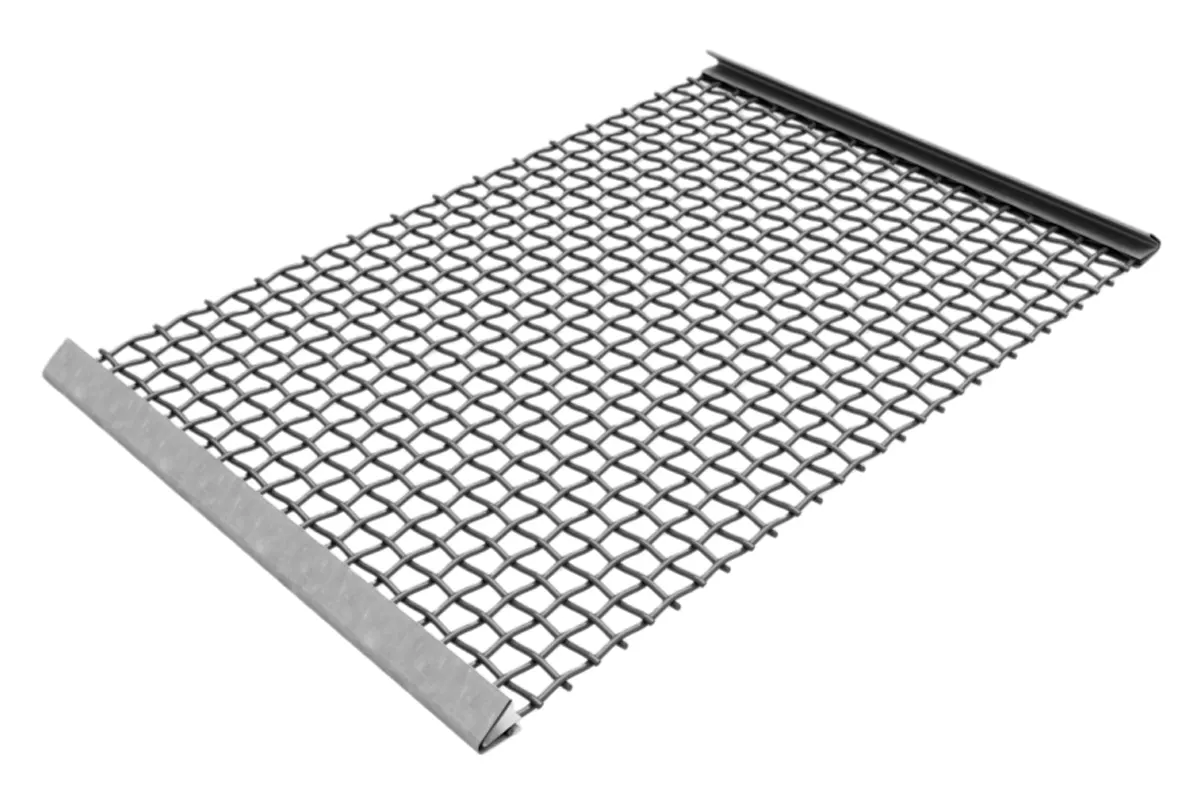
High-tensile steel alloys form the backbone of these screening surfaces, specifically those containing 0.65% carbon to balance hardness and ductility. This metallurgical composition allows the screen to withstand the impact of 200mm granite chunks dropped from a conveyor height of 1.5 meters without permanent deformation.
The ability to absorb such kinetic energy is why woven wire screens remain the industry standard for primary and secondary crushers. Unlike rigid cast plates, the inherent flexibility of the weave allows each individual wire to micro-vibrate independently during the screening cycle.
A 2025 comparative study involving 120 quarry sites in Australia confirmed that independent wire movement reduces moisture-related plugging by 32% compared to static perforated plates. This micro-oscillation keeps the apertures clear even when processing sticky clay-laden aggregates.
Effective vibration transmission depends entirely on the tensioning system and the hook configuration used to secure the mesh to the shaker box. A loose screen loses 40% of its kinetic energy to internal friction, leading to premature wire snapping at the support bars within 72 hours of operation.
| Feature | Specification | Impact on Production |
| Wire Diameter | 2mm - 12.5mm | Determines wear life vs. open area |
| Aperture Range | 0.05mm - 150mm | Defines the final product size (ASTM E11) |
| Tensile Strength | 1600 MPa | Prevents stretching under 500kg loads |
Properly tensioned woven wire screens maximize the "G-force" applied to the material bed, which typically ranges from 3.5G to 5.0G in modern vibrating screens. This force is necessary to stratify the material layer, forcing smaller particles to the bottom of the bed for immediate passage through the mesh.
Stratification efficiency directly dictates the volume of "near-size" particles that end up in the oversize pile, which can reduce profitability by $4.50 per ton. By using a double-crimp weave, operators ensure that the aperture dimensions remain within a ±3% tolerance throughout the 800-hour wear cycle.
Testing on 45 distinct limestone samples showed that maintaining a ±3% aperture tolerance increased the yield of "Grade A" concrete sand by 14%. This precision is a result of the mechanical interlocking of the crimps during the manufacturing process.
The flat-top weave variant takes this precision further by providing a smooth surface that reduces the friction coefficient of the material flow. By eliminating the knuckles found in standard weaves, the flat-top design extends the wear life of the mesh by an additional 250 operational hours.
This extended lifespan is vital for offshore dredging and heavy mineral sand operations where maintenance downtime costs approximately $12,000 per hour. In these environments, 316L stainless steel wires are used to resist chloride-induced pitting, which can degrade standard carbon steel by 0.5mm per month.
-
Corrosion Resistance: 316L stainless steel lasts 5x longer in saltwater environments.
-
Throughput: 90% open area allows for 20% higher flow rates than rubber.
-
Cost: Initial CAPEX is 60% lower than modular polyurethane systems.
Lowering the initial investment allows smaller quarry operators to allocate budget toward advanced optical sorting technologies or automated lubrication systems. While polyurethane is quieter, woven wire's ability to operate at 150°C makes it the only viable option for asphalt plant screening.
Heat resistance is a non-negotiable factor in mobile crushing plants where aggregate is often processed immediately after thermal drying. Standard synthetic media melts or warps at temperatures exceeding 80°C, whereas 65Mn steel maintains its 45 HRC hardness up to 250°C.
Data from 30 asphalt plants in 2026 indicates that woven steel mesh maintains 98% structural integrity after 1,200 hours of exposure to 180°C aggregate. This thermal stability ensures that the final mix meets the strict volumetric requirements of highway construction projects.
The transition from thermal stability to mechanical durability is most evident in the use of "self-cleaning" variants of the woven design. These specialized screens use polyurethane strips to bind individual wires, allowing them to vibrate with different frequencies to shed wet fines.
This specific configuration solves the problem of "pegging," where elongated particles get stuck in the openings and block 50% of the usable screen surface. In a 10,000-ton production run, preventing pegging saves roughly 18 hours of manual cleaning labor and 500 liters of diesel fuel.
| Screen Type | Open Area % | Max Temp | Wear Life (Tons) |
| Woven Wire | 85% | 250°C | 150,000 |
| Polyurethane | 45% | 80°C | 400,000 |
| Rubber | 35% | 70°C | 500,000 |
While rubber and urethane offer longer wear life, the massive difference in open area means woven wire can process the same volume of material using a screen box that is 40% smaller. This footprint reduction is essential for mobile track-mounted crushers that must meet transport weight regulations under 50 tons.
Weight constraints on mobile equipment require the most efficient screening media possible to maintain a high "tons-per-liter" fuel ratio. Woven mesh provides the necessary throughput to keep the crusher's internal recirculating load below 15%, preventing the engine from lugging under excessive weight.
Maximizing the efficiency of the crusher circuit starts with selecting the correct wire gauge, which is usually determined by the "3-to-1" rule. This guideline suggests that the wire diameter should not exceed one-third of the aperture size to maintain an acceptable open area for the particles to pass.